Give Each Shade a Commercial Role
A useful range needs enough distinction to serve the intended market while keeping the quantity per shade realistic for the selected formula and component route.
Build liquid, cream, stick and powder blush around the finish, payoff, blendability, shade architecture and packaging experience your market expects. UniBeauty coordinates the product route, colour work, component, applicator, sampling and production planning as one commercial program.
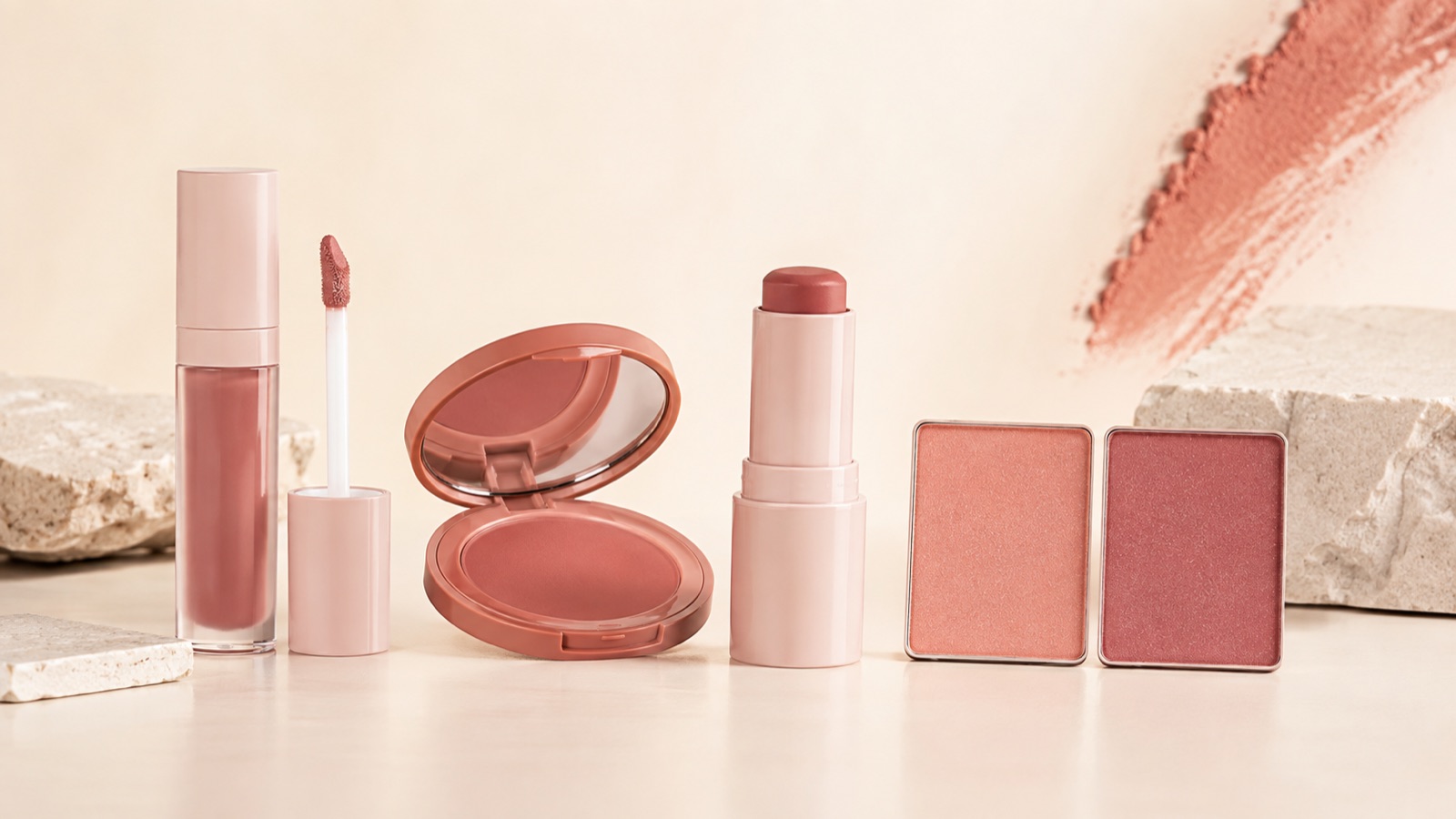
Translate the target consumer and channel into a workable format mix, colour range, component family and sampling plan.
Unbranded ODM concept visualization; final formula, shades, components, claims and specifications are project-specific.
The right format depends on the target consumer, channel, application behaviour, desired finish, shade plan, component and intended quantity for each SKU. A liquid formula may prioritize dose control and blend time; a stick needs glide and mechanism compatibility; a pressed powder requires pan, pressing and pickup decisions. UniBeauty reviews the product and pack together before the route is confirmed.
Different formats create different formula, filling, pressing, mechanism, applicator and transport questions.
| Format | Formula and use decisions | Component and production decisions |
|---|---|---|
| Liquid blush | Payoff, spread, blend time, dry-down, radiance or soft-matte finish | Viscosity, doe-foot or brush, wiper, bottle, fill and closure |
| Cream blush | Slip, pickup, cushion, emollience, buildability and wear direction | Jar, pan or compact, sealing, applicator and compatibility |
| Blush stick | Glide, hardness, colour release, edge control and temperature behaviour | Diameter, twist mechanism, cap fit, filling route and decoration |
| Pressed powder | Particle feel, pickup, payoff, blendability and finish | Pan size, pressing parameters, compact, mirror or applicator and drop protection |
| Lip-and-cheek | Cross-area sensorial and colour direction, comfort and blendability | Pack format, application hygiene, claim boundary and use instructions |
Claim boundary: Long-wear, transfer-resistant, waterproof or skin-benefit directions must be validated for the selected formula, pack and intended market before they are used as claims.
Define the consumer and channel first, then map depth, undertone, chroma and finish across the intended range.
A useful range needs enough distinction to serve the intended market while keeping the quantity per shade realistic for the selected formula and component route.
Global programs can define a core range plus market-led additions rather than assuming one small shade set fits every region. Final shades follow agreed references and sample approval.
A related packaging family, shade logic and visual system can be explored across the face collection. Each format still requires its own compatibility, fill or pressing route, checkpoints and compliant product information.
Begin with a suitable existing product direction, then coordinate approved shades, components, decoration and retail packaging.
Review a benchmark, formula or specification for manufacturing feasibility, shade work, component and destination-market inputs.
Develop format, sensorial target, finish, shade architecture, component and packaging together for a new launch or category expansion.
Colour and ingredient rules, label content, Responsible Person or importer obligations, notification or listing and claims evidence vary by destination. Market and channel belong in the first review.
Plan inclusive complexion merchandising from the intended consumer and market. Avoid unsupported universal-suitability claims.
For heat-prone routes, include expected storage and transport conditions - especially for sticks and creams - when planning formula, component and review inputs.
Align the applicable brand, Responsible Person, importer or local applicant and the product information needed for their market process.
Prepare ingredient, shade, net-content, batch, warnings and claims inputs for market-specific artwork review rather than treating the carton as a final decoration step.
UniBeauty can coordinate agreed product and manufacturer information. Final market authorization and legal responsibility remain with the applicable brand, Responsible Person, importer or local applicant.
Depending on the format, agreed checkpoints can include appearance, shade match, payoff, blendability, viscosity or hardness, fill or press consistency, pan adhesion, mechanism function, closure, component compatibility and relevant stability or transport review. The final plan follows the approved specification.
Formula route, colour matching, component availability, decoration, intended quantity per shade, testing and timing all affect feasibility. Review the range as a SKU architecture, not only one total quantity.
They can share a visual language, but formula viscosity, wiper and applicator needs may differ. Component suitability is confirmed by format and sample, not appearance alone.
Yes, when the project has a defined format, consumer, positioning, intended quantity per SKU, packaging direction and launch stage. The review focuses on a route that supports the intended product experience.
Related shades can be explored across liquid, cream, stick or powder, but pigment system, base and finish can affect how colour appears. Each format needs its own sample approval.
Share format, finish, shade references, number of SKUs, component and pack direction, target market, intended quantity per SKU, timing and required market documents.
Yes, a blush palette project can be reviewed around the intended consumer, channel and quantity. Confirm the number and role of shades, pan dimensions, powder or mixed-format direction, compact or palette construction, mirror or applicator, pressing or filling needs, decoration, carton and quantity per shade or finished palette. Component fit and production feasibility are confirmed before the palette route is approved.
The review depends on whether the product is liquid, cream, stick or pressed powder. Relevant inputs can include payoff, spread, pickup, blend time, dry-down, finish, wear direction, viscosity or hardness, pigment and base behaviour, fill or pressing route, component compatibility, approved shade references and sample acceptance criteria.
First choose whether an eligible established direction or a more customized formula is required. Then define payoff, spread, blend time, dry-down, radiance or soft-matte finish, viscosity, applicator, wiper, bottle, shade plan, branding and quantity per SKU. The formula, component and decoration route should be reviewed together rather than selecting the bottle after the product is approved.
No. The workable minimum can depend on the formula or batch, each shade or SKU, pan or component, decoration process, printed packaging and assembly route. A large total order split across too many low-volume shades may still create production or packaging constraints, so the quantity map should show units for every shade and finished pack.
Share the blush format, finish, shade plan, component reference, target market, intended quantity per SKU and launch stage. UniBeauty will review the appropriate private label, OEM or ODM path.
Submit a Blush Project Brief