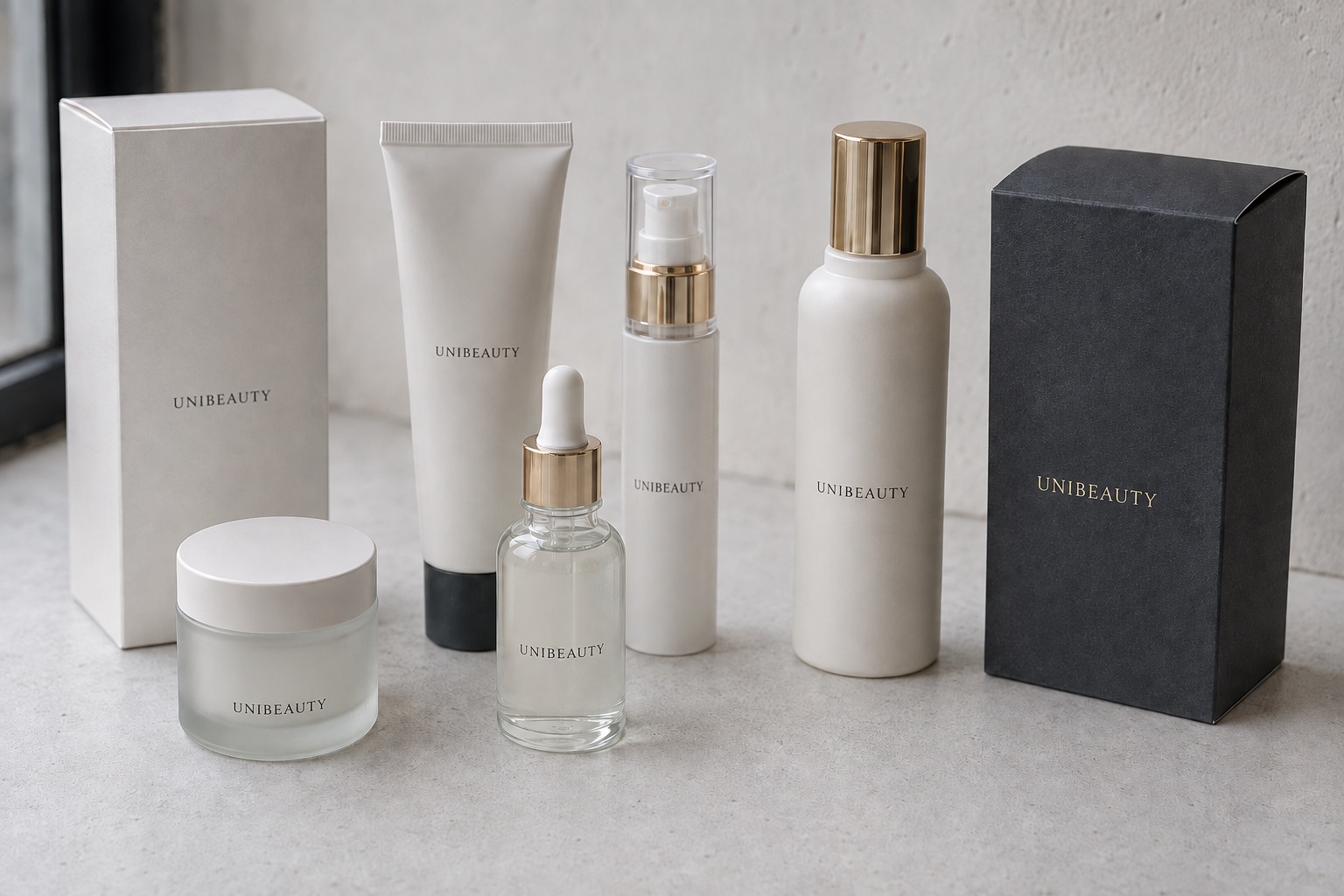
Cleansing
Facial cleanser, cleansing cream, gel, mousse, balm, oil and portable cleansing stick directions.
Develop private label cleansers, toners, serums, face oils, creams, masks, lip care and selected sun care with formula and packaging coordination.
A useful skincare brief defines the target consumer, use occasion, texture, sensory experience, ingredient or claims direction, benchmark products, packaging and destination market. Formula and packaging should be evaluated together because compatibility, protection, filling, stability, use experience and documentation depend on the complete product system rather than a single ingredient or claim.
Start with the intended role and use experience, then evaluate ingredient direction, packaging, compatibility, stability, safety and destination-market requirements as one system.
Facial cleanser, cleansing cream, gel, mousse, balm, oil and portable cleansing stick directions.
Explore face serum development
Toner, essence water, facial mist, water, gel or emulsion serum, face oil, dual-phase serum and capsule or bead formats.
Face cream, gel-cream, jelly cream, eye cream, eye essence, body lotion and hand or foot care directions.
Sheet, hydrogel, clay, mud, gel, jelly, cream and oil-bead masks for single-use or multi-use packaging.
Lip balm, tinted balm, lip oil, lip mask, body lotion and selected targeted-care directions.
Spray, lotion, cream, BB cream and stick directions require product-specific testing and destination-market review before claims are published.
Texture, packaging protection, dispensing and validation needs change with the selected format.
| Format group | Main development questions |
|---|---|
| Cleansers | Rinse experience, texture transformation, eye-area use, pump or tube selection and required testing. |
| Toners, serums and oils | Viscosity, ingredient direction, dispensing, light and air protection, stability and compatibility. |
| Creams and eye care | Texture, absorption, applicator, packaging protection, climate and repeated-use hygiene. |
| Masks | Material or texture, spread, setting or rinse behavior, pack type, compatibility and claims evidence. |
| Sun care directions | SPF, PA, UVA, UVB, water resistance and label wording require product-specific testing and market review. |
Buyer note: Ingredient-led concepts such as PDRN or copper peptide skincare can be evaluated only after ingredient identity, INCI, regulatory status, stability, test plan and compliant claims are confirmed. Medical or regenerative language should not be used.
Start with the customer’s current skincare shelves, imported and own-brand products, local price bands and available sales feedback. Identify which consumers or routine needs are underserved, then choose a small set of core products with distinct roles. A complete development scope does not require a complete routine at the first launch. Set priorities, target cost and quantity for each cream, serum, cleanser or other selected format, then coordinate formula, packaging and brand presentation around that plan.
Facial Cleanser, Foam Cleanser, Gel Cleanser, Cream Cleanser, Cleansing Balm, Cleansing Oil, Makeup Remover.
Face Cream, Moisturizer, Hydrating Cream, Gel Cream, Barrier Repair Cream, Sleeping Cream.
Facial Toner, Essence, Lotion, Facial Mist.
Retinol Serum, Bakuchiol Serum, Peptide Serum, Collagen Serum, Firming Serum, Retinal, Copper Peptide, Adenosine.
Vitamin C Serum, Niacinamide Serum, Tranexamic Acid Serum, Whitening Essence, Alpha Arbutin, Glutathione.
Hyaluronic Acid Serum, Moisture Essence, Deep Hydration Serum, Polyglutamic Acid, Beta Glucan, Ceramide.
Copper Peptide Serum, Peptide Repair Cream, Multi-Peptide Essence, PDRN Serum, PDRN Ampoule, PDRN Cream, PDRN Mask, Exosome Serum, Exosome Ampoule, Exosome Repair Cream, EGF Serum, FGF Serum, Growth Factor Cream, Spicule Serum, Micro-Needle Serum, Marine Spicule Treatment, Deep Repair Ampoule, Skin Renewal Cream.
Barrier Repair Cream, Ceramide Cream, Cica Cream, Panthenol Cream, Centella Asiatica, Squalane, Madecassoside.
Eye Cream, Eye Serum, Eye Mask, Eye Patch, Anti-Aging Eye Cream, Dark Circle Care, Firming Eye Treatment.
Hydrating Sheet Mask, Brightening Sheet Mask, Anti-Aging Sheet Mask, Hydrogel Eye Mask, Hydrogel Face Mask, Overnight Mask, Sleeping Cream Mask, Clay Mask, Detox Mask, Powder-to-Paste Mask, Alginate Peel-Off Mask and Powder + Essence Mask directions.
Glass Skin Serum, Glow Cream, Dewy Skin Essence, Retinol Night Cream, Exfoliating Serum, Recovery Cream, Snail Mucin Products, Fermentation Essence, Rice Extract Skincare.
Body Lotion, Body Butter, Body Cream, Body Scrub, Firming Body Cream, Body Oil.
Self Tanner, Tanning Mousse, Bronzing Lotion, Acne Patch, Hydrocolloid Patch, Pimple Patch.
Lip Mask, Lip Sleeping Mask, Lip Repair Balm.
Can a private label moisturizing powder mask be developed? It can be reviewed as a private-label, OEM or ODM project direction. “Powder mask” is not one specification: it may mean a dry powder mixed with water or another activator, an alginate peel-off or rubberizing mask, or a two-part powder-and-essence format. UniBeauty first confirms the intended user, application ritual, cosmetic benefit direction, texture after mixing, setting or rinse-off behavior, fill weight and destination market before recommending a route.
What should the buyer specify? Share whether the product is for retail home use, spa or salon use, or professional treatment; the intended moisturizing and comfort direction; any ingredient preference; single-dose sachet, multi-use jar or professional pack; mixing method; target price; quantity per SKU; and whether an established formula or custom development is preferred.
What affects MOQ, cost and lead time? Formula status, powder handling, moisture protection, primary and secondary packaging, number of variants, printing method, required tests and order quantity all matter. A suitable established route may be faster than a new formula or dual-component pack. Final sample, compatibility, stability, claims, documentation, MOQ and timeline are confirmed for the selected project.
Compare formula routes → · Review packaging inputs → · Send a powder mask brief →
Fastest test-market route. When suitable finished inventory is available, a ready-stock or co-branded product lets a buyer start without funding a full custom production run. UniBeauty can recommend recent products for the intended channel; dispatch timing is confirmed against the selected item, current stock and destination.
Selected skincare private-label route. When an established UniBeauty product supplied without an existing brand logo fits the brief, some projects may begin at approximately 500–1,000 units with a customer label and redesigned outer package. This keeps the established base product while adapting brand presentation.
Formula changes, new components, direct pack printing, multiple versions, dedicated decoration, testing or market-specific requirements can create a different MOQ, unit price and timeline. UniBeauty also plans larger runs from several thousand to tens of thousands of units. The exact route depends on the product, formula status, packaging, branding method, quantity per SKU and destination market. Review how MOQ is calculated or share the product you need.
Active-ingredient boundary: PDRN, peptide, copper peptide, exosome, EGF, FGF, retinoid and spicule directions require ingredient identity, INCI, regulatory-status, formulation, stability, safety, testing and claims review. Medical or regenerative claims are not implied.
For a useful skincare quotation, define the product format, target consumer, texture, ingredient direction, claims direction, packaging, destination market and estimated quantity for each SKU.
Each item is a project-development direction rather than a fixed formula, claim, certification, MOQ, price, lead time or market approval. Final availability, specification, testing, documentation and compliant wording are confirmed for the selected product and destination market.
UniBeauty is a China-based product-development and manufacturing partner for brands, national agents and established distributors developing their own skincare lines. We connect market and shelf analysis with core-SKU selection, formula and packaging decisions, competitive pricing and repeat supply. A new brand can be supported by an experienced team with an existing sales network.
What the customer receives: selected product priorities, a formula or material brief, packaging options, quantity and target-cost assumptions, sample approval criteria, and a launch-and-supply plan. These decisions connect the distributor’s commercial brief to the laboratory, packaging and production work.
Compare the complete procurement cost. Work from the intended retail position and channel terms to a target cost, then compare quotations for the same product quality, customization, testing, packaging and delivery scope. A lower unit price can require higher tooling spend or more packaging stock. UniBeauty uses product and supply-resource planning to offer highly competitive products and prices within the agreed scope.
Compare formulation and customization routes · Plan a coordinated collection or gift set · Review quantities by SKU
A structured brief helps the team review feasibility, sampling, quantities, timing and quotation with fewer repeated questions.
Each project follows a coordinated path, with technical details adjusted to the product and destination market.
Clarify consumer, channel, product direction, benchmarks and commercial inputs.
Choose private label, OEM or ODM support according to the project starting point.
Prepare samples and evaluate the agreed product and packaging criteria.
Coordinate components, compatibility, logo, decoration and information files.
Plan relevant checks and documentation for the product and destination market.
Approve final details and coordinate production and delivery preparation.
Yes. UniBeauty supports customer formulas and ingredient requirements, and develops options from a commercial or sensory brief. R&D review and sampling establish the feasible direction. Compare dedicated development with suitable established options, considering testing, materials, packaging, order volume and the intended retail position. In a series, prioritize the product that addresses the clearest need and define how companion products differ. Record which SKUs are ready for the first launch and which need more development; sales and stock feedback then guide replenishment and later additions.
Select packaging according to formula needs, user experience, protection, compatibility, decoration, quantity and target cost. Samples and compatibility work may be required before confirmation.
A benchmark is useful for explaining texture, sensory experience, packaging and market position. It should guide the brief rather than be treated as permission to copy another formula or brand identity.
Documentation depends on the product, formula, destination market, testing scope and production route. Requirements are confirmed for the specific project.
Move between category strategy, product development, manufacturing and the inquiry brief.
Market-aligned development directions
Build a facial serum program around formulation and pack compatibility
Private label facial serum projects require more than a trending ingredient list. UniBeauty helps brands define texture, use occasion, claim boundaries, stability needs and packaging compatibility before a formula direction is approved.
Aqueous facial serums
Scope water-light sensory, layering behavior, target skin type and dispenser compatibility for an aqueous serum brief.
Peptide & anti-aging directions
Convert an ingredient story into a compliant brief with realistic claim language, dosage review and stability planning.
Barrier-support serum concepts
Define consumer problem, sensory target, formula architecture and usage routine without overpromising outcomes.
Serum packaging coordination
Evaluate dropper, pump or airless packaging against viscosity, fill process, dosage and compatibility requirements.
Related capabilities: skincare formula development · serum packaging · private label face cream · private label eye cream · scope a skincare project