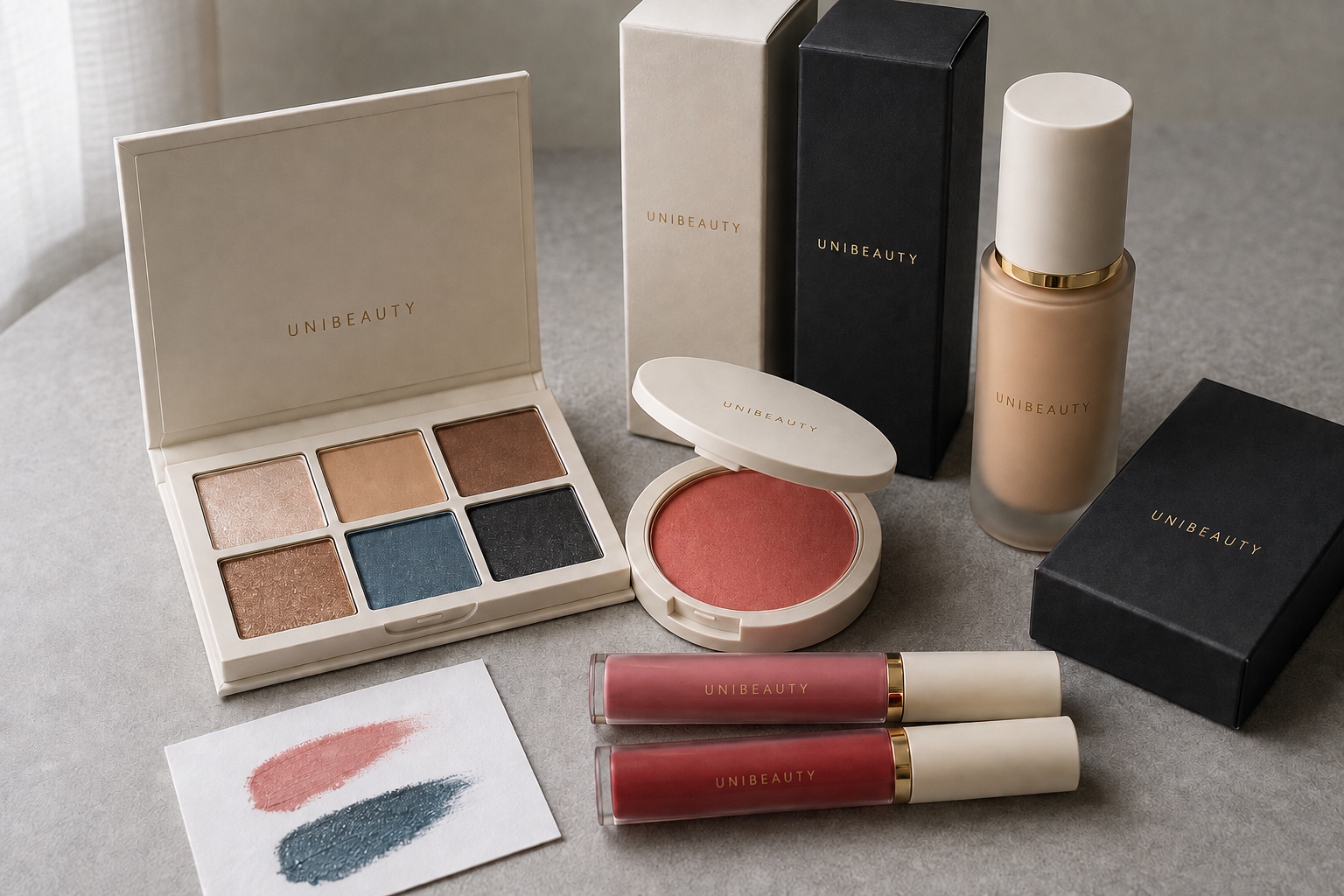
Face Makeup
Primer, liquid foundation, foundation cream, cushion, loose or pressed powder, concealer, contour, highlighter and blush in liquid, cream, powder or stick directions.
Develop private label face, eye and lip makeup across foundation, powder, concealer, blush, contour, brow, eyeliner and lip formats.
A private label makeup line starts with the target consumer, channel, product formats and launch priorities. The development team then coordinates formula or product selection, shade direction, components, applicators, decoration, samples and market requirements. Concealer, contour and brow products can share a visual system while each product keeps the formula, pack and quality checks appropriate to its format.
Organize the development brief by face, eye and lip products so related items can share one clear collection direction.
Primer, liquid foundation, foundation cream, cushion, loose or pressed powder, concealer, contour, highlighter and blush in liquid, cream, powder or stick directions.
Eyeliner, brow pencil, liquid brow pen, brow powder, brow cream and brow tint, planned around application control, payoff, finish and component direction.
Lipstick, liquid lip, lip cream, lip gloss, glaze, jelly, liner, balm, tinted balm, lip oil and lip mask with coordinated shade, applicator and packaging decisions.
Each format brings different formula, filling, component and use-experience decisions.
| Format | Decisions to confirm |
|---|---|
| Liquid | Viscosity, finish, coverage or payoff, applicator, wiping system and fill. |
| Cream | Slip, pickup, blendability, pan or jar, component fit and temperature stability. |
| Powder | Pressed or loose form, payoff, particle direction, pan structure, puff or brush. |
| Stick | Glide, hardness, payoff, twist mechanism, diameter and cap fit. |
| Pencil | Tip shape, core hardness, line definition, sharpening or mechanical component. |
| Cushion | Formula–sponge compatibility, pickup, compact, puff, refill and sealing. |
Buyer note: Waterproof, transfer-proof and long-wear are validation-dependent performance directions. They should be confirmed through the selected formula, component and test plan.
Plan the range from the customer’s shelves, target consumers, leading local formats and price bands. Select a lead product, then add formats with distinct coverage, color or application roles. A broad development scope allows a focused first launch: near-duplicate textures or formats can wait until demand justifies them. Formula, shades, components, applicators and retail presentation are coordinated by SKU, with quantities and target costs tied to the channel plan.
Explore lip oil and lip tint development
Matte Lipstick, Velvet Lipstick, Cream Lipstick, Long Lasting Lipstick, Liquid Lipstick, Bullet Lipstick, Custom Color Lipstick, Lip Gloss, Shiny Lip Gloss, Clear Lip Gloss, Plumping Lip Gloss, Glitter Lip Gloss, High Shine Lip Gloss, Lip Tint, Water Tint, Gel Tint, Long Wear Tint, Nourishing Lip Oil, Glossy Lip Oil, Tinted Lip Oil, Lip Liner Pencil, Waterproof Lip Liner, Retractable Lip Liner, Lip Balm, Repair Lip Balm, Tinted Lip Balm, SPF Lip Balm, Lip Mask, Lip Sleeping Mask, Lip Scrub.
Liquid Foundation, Matte Foundation, Hydrating Foundation, Full Coverage Foundation, Lightweight Foundation, Cushion Foundation.
Liquid Concealer, Cream Concealer, Color Corrector, Under Eye Concealer.
BB Cream, CC Cream, Tinted Moisturizer, Makeup Primer, Pore Minimizing Primer, Hydrating Primer, Mattifying Primer.
Powder Blush, Cream Blush, Liquid Blush, Stick Blush, Powder Highlighter, Liquid Highlighter, Cream Highlighter, Highlight Stick, Contour Stick, Cream Contour, Powder Contour, Bronzer.
Loose Setting Powder, Pressed Setting Powder, Translucent Powder, Banana Powder, Makeup Setting Spray, Long Lasting Setting Spray, Hydrating Setting Spray, Matte Setting Spray, Glow Setting Spray, Finishing Powder, Fixing Spray, Makeup Refresh Spray.
Eyeshadow Palette, Single Eyeshadow, Matte Eyeshadow, Shimmer Eyeshadow, Glitter Eyeshadow, Liquid Eyeshadow, Cream Eyeshadow, Eyeshadow Stick, Liquid Eyeliner, Gel Eyeliner, Pencil Eyeliner, Waterproof Eyeliner, Felt Tip Eyeliner, Eyebrow Pencil, Brow Powder, Brow Gel, Brow Soap, Brow Mascara, Microblading Pen, Lengthening Mascara, Volumizing Mascara, Waterproof Mascara.
Foundation Stick, Concealer Stick, Contour Stick, Blush Stick, Highlighter Stick, Eyeshadow Stick, Lip Stick.
Makeup Starter Kit, Beginner Makeup Set, Professional Makeup Kit, Travel Makeup Set, Gift Makeup Set, Custom Beauty Box.
Professional Eyeshadow Palette, Pro Foundation, Stage Makeup, Long Wear Makeup, K-Beauty Makeup, Clean Beauty Makeup, Vegan Makeup.
For a useful makeup quotation, group the brief by product family and provide the format, shade count, finish or benchmark, component, applicator, packaging and estimated quantity for each SKU.
Each item is a project-development direction rather than a fixed formula, claim, certification, MOQ, price, lead time or market approval. Final availability, specification, testing, documentation and compliant wording are confirmed for the selected product and destination market.
A good starting route balances product performance, speed, customization and the amount of inventory the brand can sell.
Custom private-label makeup generally starts around 5,000–10,000 units. Automated formula production and filling require a workable batch, while a printed logo or other decoration can add artwork, plates or screens, color setup, component minimums, process selection and approvals. The exact MOQ is reviewed by product, shade, component, decoration and quantity per SKU.
For a brand that wants to test the market first, ready-stock or co-branded products can reduce inventory pressure and usually move faster than a new logo-printing run. UniBeauty can shortlist recent products for the target consumer and sales channel, then arrange samples or color swatches for evaluation. Availability and dispatch timing are always confirmed against current stock.
A custom-logo project may take approximately one to two months after the specification, artwork and samples are approved; timing varies by product and process. Review the MOQ planning guide or share your product and sales channel.
A structured brief helps the team review feasibility, sampling, quantities, timing and quotation with fewer repeated questions.
Each project follows a coordinated path, with technical details adjusted to the product and destination market.
Clarify consumer, channel, product direction, benchmarks and commercial inputs.
Choose private label, OEM or ODM support according to the project starting point.
Prepare samples and evaluate the agreed product and packaging criteria.
Coordinate components, compatibility, logo, decoration and information files.
Plan relevant checks and documentation for the product and destination market.
Approve final details and coordinate production and delivery preparation.
Formula route, component availability, number of shades, decoration, packaging and testing needs can all affect feasibility. Quantities should be reviewed by product and shade rather than only as one total.
A coordinated component family can be explored when fill, formula compatibility, mechanism and decoration support each format. Final suitability is confirmed through component and sample review.
Use local consumer needs, shelf references and available sales by shade to define meaningful depth and undertone coverage. Identify the core shades and any market-specific additions, then allocate purchase quantities according to demand rather than equal shares. A common color story can connect complexion, cheek and lip products, while each format keeps its own sample approval and quantity plan. Review sales and stock by shade before the next order; add variants when they serve a gap instead of duplicating an existing role.
Share target products, market, benchmarks, shade direction, packaging, number of variants, estimated quantity and any required market documents.
Move between category strategy, product development, manufacturing and the inquiry brief.
Market-aligned development directions
Turn growth signals into a manufacturable makeup brief
For brands and channel teams developing private label makeup, UniBeauty connects local shelf opportunities, consumer needs and target prices with formula, shade, component, applicator and packaging decisions. Each direction below is scoped project by project before sampling or commercial commitment.
Lip oil & lip serum
Define finish, viscosity, conditioning story, applicator and pack compatibility for a private label lip oil or lip serum brief.
Multi-use sticks & cream blush
Plan payoff, blendability, shade architecture and component performance for lip-and-cheek sticks or private label cream blush.
38°C tubing mascara
Align removal target, brush geometry, component compatibility and wear-testing requirements for a private label tubing mascara program.
Foundation, glowy base & setting formats
Translate target-market expectations into finish, coverage, shade range, wear and packaging requirements.
Related capabilities: formula development · custom cosmetic packaging · custom applicators and tools · discuss a product brief