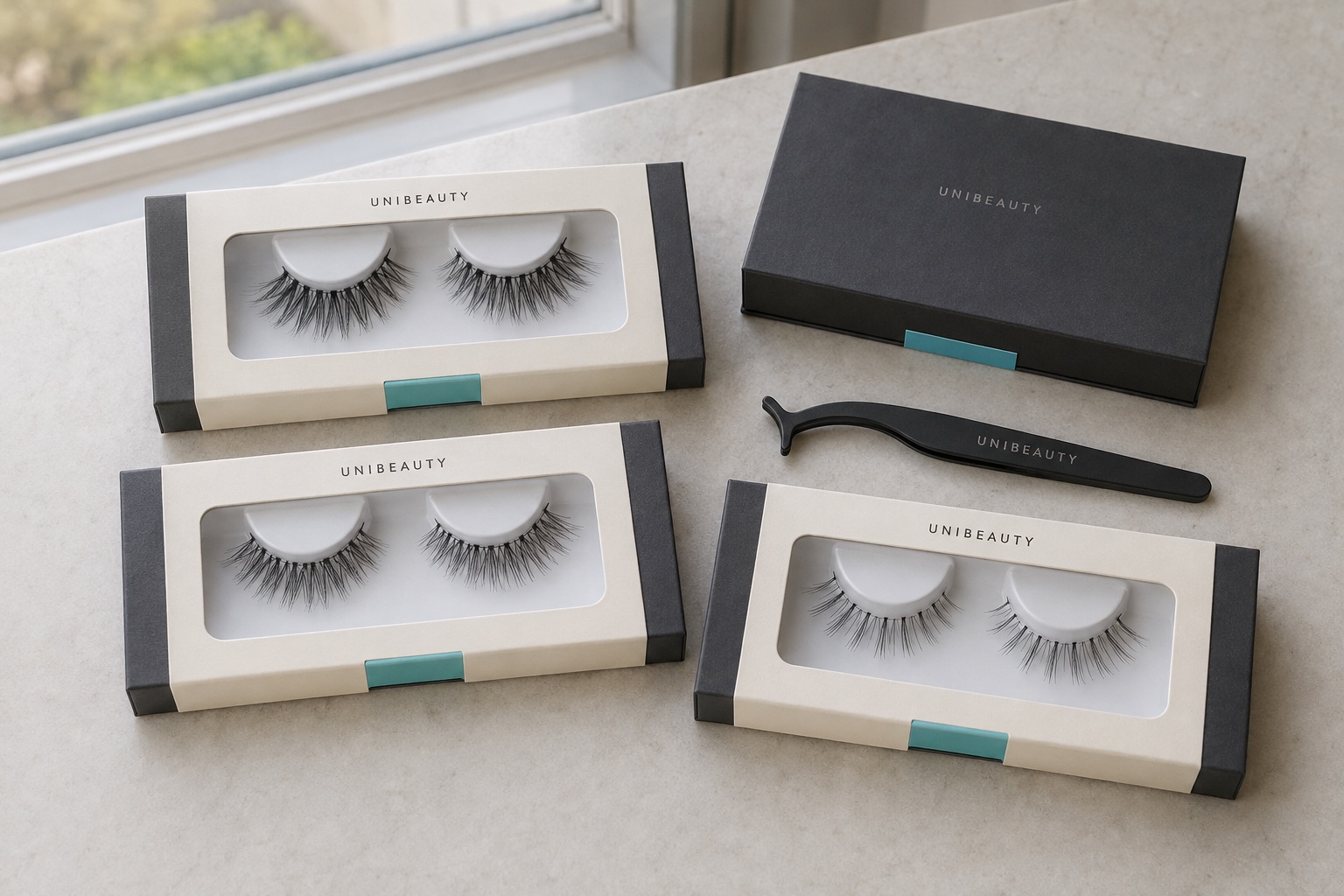
Strip Lashes
Plan eye shape, length, density, curl, band direction and single- or multi-pair packaging.
Develop strip, DIY cluster, self-adhesive and pre-glued lash directions around consumer use, style architecture, application and private label packaging.
Choose the lash format from the target consumer, application skill, wear occasion, desired control and retail channel. Strip lashes support a complete eye look, DIY clusters allow placement flexibility, and self-adhesive or pre-glued formats emphasize convenience. Style, band or segment structure, packaging, instructions and market positioning should be reviewed as one product system.
Use the product role and consumer experience to choose which directions belong in the first launch.
Plan eye shape, length, density, curl, band direction and single- or multi-pair packaging.
Coordinate segment lengths, style map, application system, tray layout, instructions and kit components.
Develop convenience-led lash formats with application experience, protection, instructions and packaging in mind.
The right route depends on the starting point, product structure, packaging and market requirements.
| Format | Best suited to | Buyer decisions | Packaging priorities |
|---|---|---|---|
| Strip lashes | Complete eye looks and familiar application | Shape, length, density, band and pair count | Tray protection, window, carton and style identification |
| DIY clusters | Custom placement and segmented styling | Lengths, map, curl, density, segment structure and kit system | Tray organization, length labels, instructions and accessories |
| Self-adhesive / pre-glued | Convenience and faster application concepts | Adhesive format, protection, use steps and target wear experience | Surface protection, hygiene, clear instructions and transport stability |
A structured brief helps the team review feasibility, sampling, quantities, timing and quotation with fewer repeated questions.
Each project follows a coordinated path, with technical details adjusted to the product and destination market.
Clarify consumer, channel, product direction, benchmarks and commercial inputs.
Choose private label, OEM or ODM support according to the project starting point.
Prepare samples and evaluate the agreed product and packaging criteria.
Coordinate components, compatibility, logo, decoration and information files.
Plan relevant checks and documentation for the product and destination market.
Approve lash construction, style or cluster map, tray, instructions and artwork, with quantities by version. Coordinate component readiness and kit assembly with the required launch window. For repeat orders, review lash refill demand separately from reusable tools and any adhesive or care products included in the brief; confirm the next quantities and production arrangements for each component.
Yes. DIY clusters can be developed as a focused lash direction and coordinated with strip lashes, applicators, tweezers, care products, trays and private label packaging.
Logo, tray, card, carton, labels and selected kit components can be discussed according to the product structure, quantity and packaging route. Final feasibility is confirmed for the project.
Build the range around local consumer preferences, application experience, eye effect and channel, using existing style sales where available. Give the core styles and supporting additions distinct roles rather than selecting many similar looks. Allocate quantities by style, length mix and retail pack; a total order does not show demand for each version. For kits, select applicators and other agreed components around the application routine, and compare the complete set price with standalone or refill options.
Share format, style references, target consumer, packaging, number of styles, estimated quantity, market and any required instructions or accessories.
A lash project can combine strip lashes, DIY clusters, applicators, tweezers, care products, trays and custom packaging within one coordinated Beauty Tools & Accessories program.
Specialist product scope: Strip Lashes, False Eyelashes, Natural Lashes, Volume Lashes, Cluster Lashes, DIY Cluster Lashes, Pre-Glued Cluster Lashes, Private Label Lash Packaging, Lash Box, Lash Kit.
Private label support: style architecture, curl, length, density, band or cluster construction, tray, box, custom logo and repeat-order specifications are reviewed by project.
For the complete specialist lash manufacturing system—including dedicated product families, buyer guides, engineering and quality-control resources—visit UNIBEAUTY Lash Manufacturing.
Move between category strategy, product development, manufacturing and the inquiry brief.
Market-aligned development directions
Plan private label cluster lashes and DIY lash kits as complete systems
A successful lash program connects lash architecture, comfort, application method, kit components and packaging. UniBeauty supports project-specific development for cluster, strip and professional lash directions.
DIY lash clusters
Define cluster length mix, curl, density, band construction and application experience for the target consumer.
Private label DIY lash kits
Coordinate lash clusters with applicator, bond-and-seal concept, remover direction, instructions and kit packaging.
Strip & professional lashes
Plan style architecture, band profile, assortment logic and presentation for retail or professional channels.
Packaging and tool integration
Align tray, carton, applicator and visual system so the full kit is coherent and production-ready.
Related capabilities: custom beauty tools · custom packaging · OEM/ODM coordination · discuss a lash brief