Define the Hero and Supporting Formats
Choose the launch priority, finish, sensorial benchmark and shade roles. Related products can share one colour story while keeping the formula and application experience appropriate to each format.
Develop a focused lip hero or a coordinated collection across oil, tint, gloss, balm and liner formats. UniBeauty aligns formula direction, shade architecture, applicator, component, decoration, sampling and production planning around one commercial launch brief.
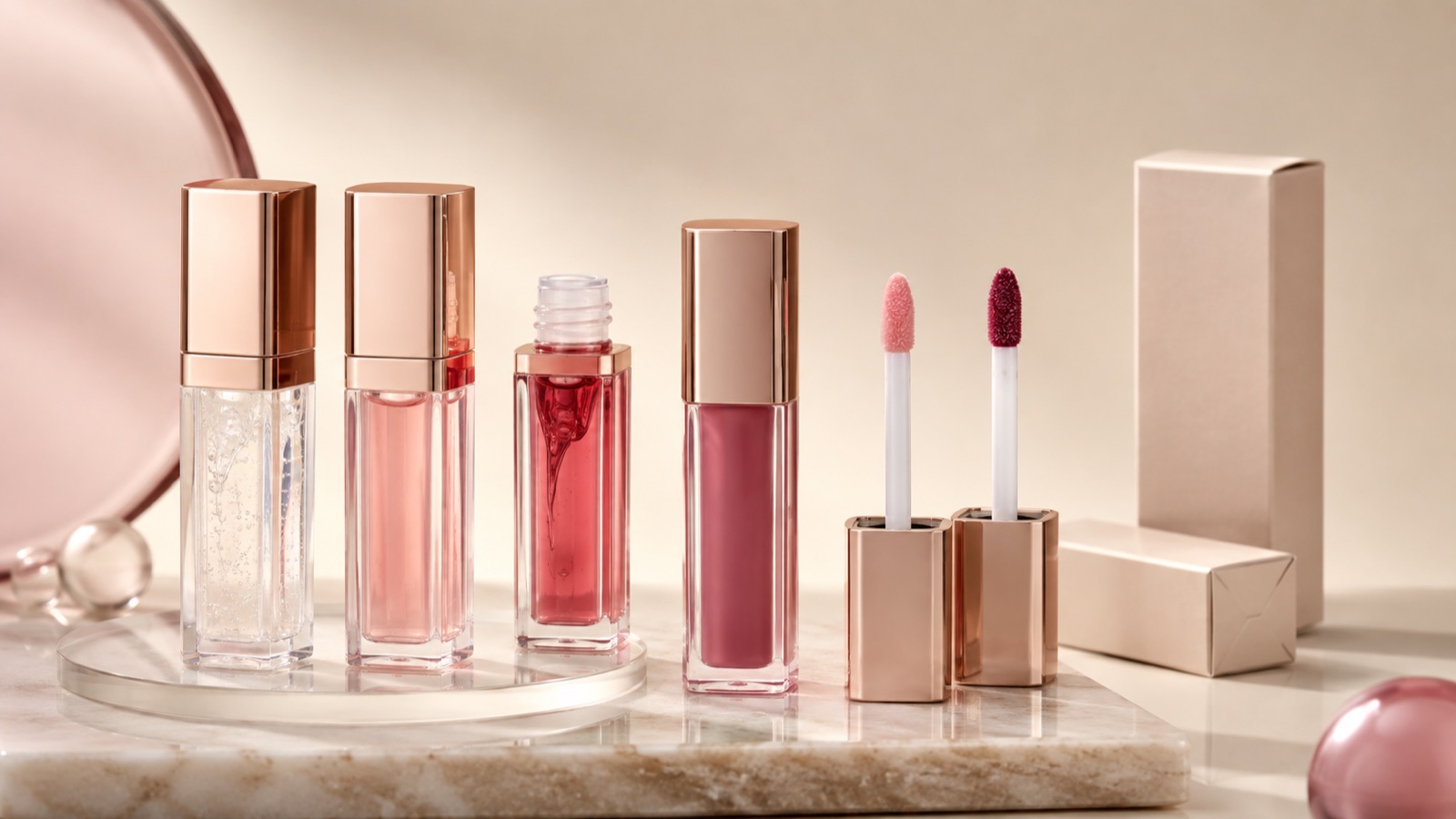
Coordinate finish, viscosity, colour, dose control, component compatibility and retail presentation around the intended consumer and channel.
Unbranded ODM concept visualization; final formula, component, claims and specifications are project-specific.
A lip program can begin with a proven private label base, an adjusted product direction or a more involved ODM brief. The suitable route depends on the target finish, colour system, sensorial benchmark, component, applicator, destination market and intended quantity for each SKU. UniBeauty coordinates those decisions before sampling so the formula and pack are developed as one usable product system.
Each format changes the formula, filling, applicator, component and evaluation questions.
| Format | Product decisions | Packaging decisions |
|---|---|---|
| Lip oil | Cushion and glide, viscosity, clarity or tint, conditioning story and fragrance/flavour direction | Bottle geometry, doe-foot shape, wiper control, leakage and formula-component compatibility |
| Water or gel tint | Stain profile, buildability, dry-down, shade depth, comfort and removal expectation | Applicator precision, fill system, neck/wiper pairing and closure |
| Lip gloss or glaze | Shine, tack, cushion, payoff, shimmer or clear direction | Applicator pickup, viscosity control, transparency and decoration |
| Tinted balm | Glide, payoff, care positioning, stick strength and temperature behaviour | Bullet or slim stick, mechanism, cap fit and label/decor route |
| Lip liner | Core hardness, drag, colour deposit, line control and blendability | Mechanical or sharpenable format, tip size, cap and shade coding |
Claim boundary: Long wear, transfer resistance, plumping, moisturising or temperature-stability directions require the selected formula, component and validation plan. They are not blanket claims.
Start with the target consumer, channel and hero finish. Then define a shade architecture that can be supported commercially at the intended quantity for each SKU.
Choose the launch priority, finish, sensorial benchmark and shade roles. Related products can share one colour story while keeping the formula and application experience appropriate to each format.
Align bottle or stick geometry, applicator, decoration, shade coding and secondary packaging. Visual consistency does not replace formula-component compatibility review.
Viscosity, solvent system, colour load and sensorial profile affect how the applicator picks up and deposits product. The wiper, neck, closure and bottle material affect dose control, leakage risk and use experience.
Coordinate approved options for shade, fragrance or flavour where suitable, component, decoration and retail presentation.
Transfer a defined formula, benchmark or specification into a manufacturing and packaging review, subject to feasibility, ownership and compliance inputs.
Develop product direction, formula attributes, shade system, applicator and packaging as one new launch or category-extension brief.
Ingredient and colour rules, label content, responsible-person or importer roles, notification or listing routes and acceptable claims vary by market. The destination belongs in the first brief, not at the end of artwork.
Confirm the responsible-person route, formula and ingredient information, label inputs and applicable facility or product-listing responsibilities.
Plan the Responsible Person, safety/PIF inputs, notification pathway, claims evidence and market-ready artwork.
Plan ingredient, label and PIF inputs early. In Singapore, different lipstick shades can require separate product notifications.
Align the local portal, artwork, ingredient or test documentation, claims evidence and transport conditions with the responsible importer.
Market authorization and final compliance remain with the applicable brand, Responsible Person, importer or local applicant. Notification should not be presented as regulator endorsement.
The relevant review can include appearance, shade consistency, viscosity, fill weight, applicator function, closure, leakage, component compatibility and agreed stability or performance checks. Final checkpoints depend on the selected formula, component, destination market and approved specification.
A coordinated visual family can be explored, but the wiper, applicator, neck and material compatibility must work with each formula's viscosity and use pattern. Matching appearance does not mean identical components are automatically suitable.
Yes. A focused hero launch can be reviewed when the product direction, target market, intended quantity per SKU, packaging route and timing are defined. The brief can preserve a component and colour system for later expansion.
Share target shades, undertone and finish references. Sampling and approval are planned around the formula route, shade count, component and agreed evaluation method.
Provide product format, shade or variant count, formula and finish direction, component, decoration, secondary packaging, intended quantity per SKU, destination market and timing.
Not necessarily. Notification and approval are different concepts. The applicable responsible company remains accountable for market compliance and should use the regulator's current official guidance.
Share the hero format, shade system, benchmark, component direction, target market, intended quantity per SKU and launch stage. UniBeauty will review the most relevant private label, OEM or ODM development route.
Submit a Lip Project Brief